
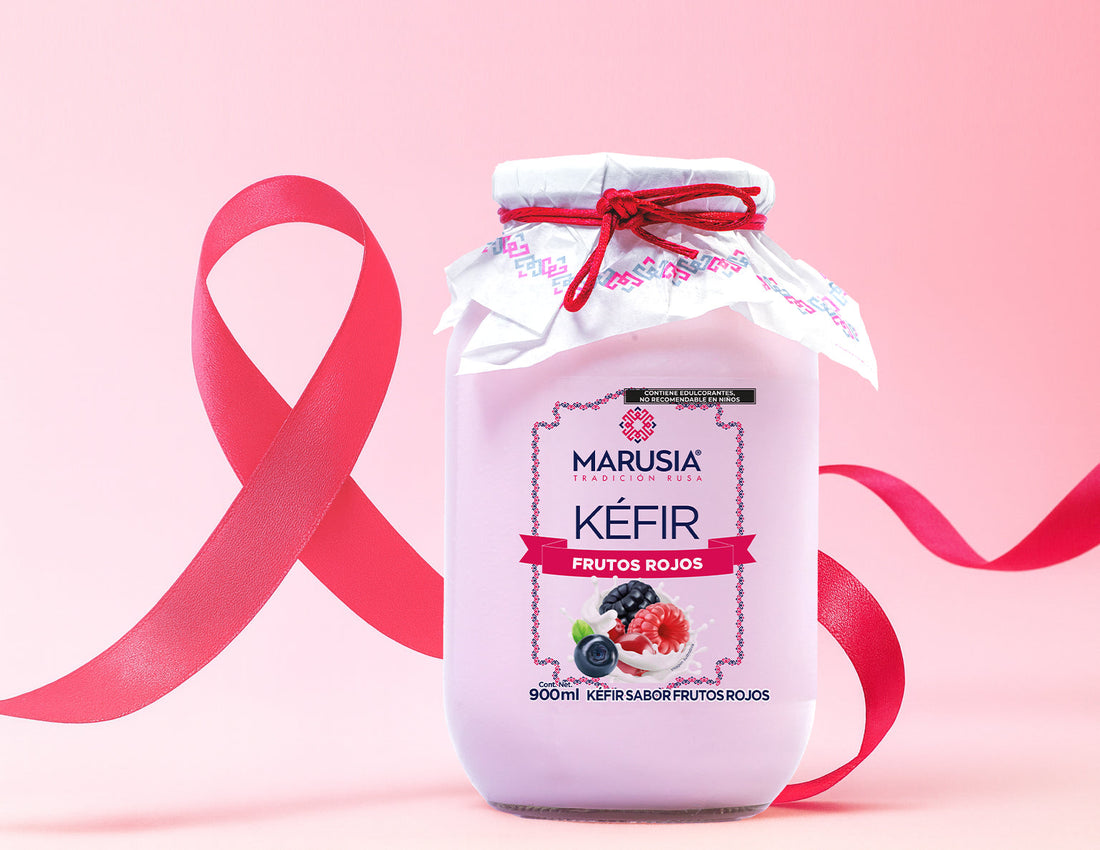
Kefir and breast cancer: how caring for your gut microbiota can support your well-being during treatment
During breast cancer treatment, every little helps. Eating well, resting, and taking care of your mental health become essential parts of the recovery process. But there's one aspect that's being discussed more and more in the medical community: the gut microbiota , that universe of microorganisms that lives inside us and influences our immunity, digestion, and even our mood.
Chemotherapy and the microbiota: a little-known relationship
Cancer treatments, especially chemotherapy, are essential to fight cancer, but they can also profoundly alter the intestinal balance.
Several scientific studies (Nature Digital Medicine, 2025; EMBO Molecular Medicine, 2025) have shown that chemotherapy can cause an imbalance in the gut microbiota (dysbiosis) , which is associated with side effects such as:
-
Nausea and vomiting
-
Diarrhea or constipation
-
Fatigue
-
Loss of appetite
-
Digestive inflammation
When the gut microbiota is compromised, the intestinal barrier weakens and some of the immune system's natural support is lost. Therefore, maintaining a balanced microbiota can make a significant difference in how the body tolerates treatments.
🥛 Kefir: a live food with therapeutic potential
Kefir is a naturally fermented product full of beneficial microorganisms —mainly Lactobacillus, Bifidobacterium and healthy yeasts— that help strengthen the gut microbiota.
Unlike other probiotics, kefir provides microbial diversity , as well as essential nutrients such as proteins, calcium, B vitamins, and bioactive compounds that modulate inflammation.
Recent studies have observed that probiotics and synbiotics (a combination of probiotics and prebiotics) can alleviate several side effects of treatment .
For example, research published in Supportive Care in Cancer (2023) with women with breast cancer found that synbiotics helped reduce fatigue, nausea, and loss of appetite , improving their quality of life during chemotherapy.
Furthermore, a clinical trial with Lactobacillus kefiri LKF01 , a kefir-derived strain, demonstrated that its use reduced episodes of severe diarrhea in patients undergoing capecitabine chemotherapy (2021).
🌸 Beyond science: well-being that can be felt
When people undergo cancer treatments, their appetite and food tolerance change . At these times, kefir can be an excellent option: it's light, easy to digest, and naturally nutritious .
Its smooth texture and slightly acidic flavor make it easier to consume when other foods are heavy.
Furthermore, thanks to its live composition, it supports intestinal balance , contributing to better nutrient absorption and a more stable digestive system.
🔬 And what does science say about kefir and cancer?
Although more clinical studies in humans are still needed, preclinical research (Food Science & Nutrition, 2021; Frontiers in Microbiology, 2020) has shown promising results:
Kefir extracts may inhibit the growth of breast cancer cells , reduce inflammation, and improve the immune response in animal models.
These findings do not mean that kefir cures cancer, but it could be a natural ally within a comprehensive approach to wellness, along with medical treatment, a balanced diet, and emotional support.
💗 Taking care of your gut microbiota is taking care of your recovery
Every day, more specialists recognize that the gut is a "second brain" and a key regulator of the immune system.
During and after treatment, strengthening the gut microbiota with fermented foods such as kefir can promote recovery, improve tolerance to medications, and contribute to a more complete sense of well-being.
At Kéfir Marusia , we believe that healing also means reconnecting with what is natural, alive, and authentic .
Because every sip counts. Every cell matters. And every step toward your well-being starts from within.
Scientific sources consulted:
-
Nature Digital Medicine (2025): Impact of chemotherapy on gut microbiota in breast cancer patients.
-
Supportive Care in Cancer (2023): Effects of synbiotic supplementation in women receiving chemotherapy for breast cancer.
-
Frontiers in Nutrition (2022): Probiotics and reduction of chemotherapy-induced gastrointestinal toxicity.
-
Food Science & Nutrition (2021): Antitumor and immunomodulatory effects of kefir extracts in breast cancer models.
-
EMBO Molecular Medicine (2025): Gut microbiota disruption and systemic inflammation in oncology.